TRITON the Way You Want
Reef DosingChoose Your Supplementation System
Four paths. One integrated system. Core7 Flex, Balling, or calcium reactor — every approach guided by ICP-OES testing, every path connected by TRITON Infusion.
TRITON offers four distinct reef aquarium dosing paths — Core7 Flex (a flexible platform supplying calcium, alkalinity, magnesium, and trace elements as 4-Part, 3-Part, or 2-Part), TRITON Balling (ICP-tested salts for the traditional Balling method), and TRITON CaRx media (99.9% pure calcium carbonate for calcium reactors) — all connected to the TRITON Method through TRITON Infusion, a proprietary trace element blend, and guided by ICP-OES water analysis from 500,000+ reef aquarium tests.
One Platform. Four Paths. Your Choice.
Four Ways to Dose Your Reef — One System Behind All of Them
One of the main questions in reef keeping: which supplementation system should I use? TRITON answers it differently — by offering four distinct paths, each optimised for a different priority.
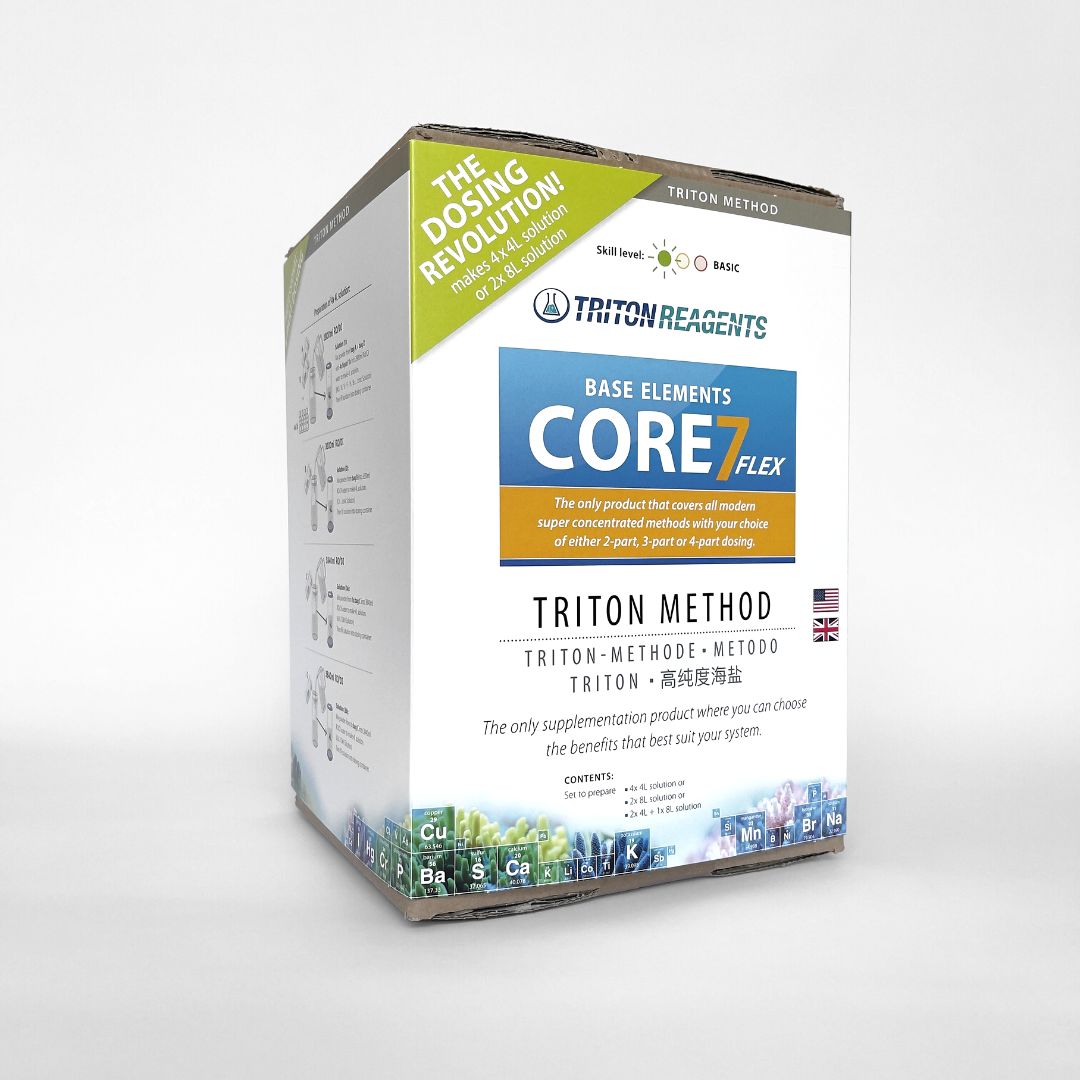
Core7 Flex 4-Part
- Separate Ca/Mg adjustment
- Best trace element stability
- Highest concentration available
- Requires 4 dosing pump heads
Infusion included
Core7 Flex 2-Part
- Fewer dosing pump heads
- Simpler monitoring
- High concentration
- No separate Ca/Mg control
- Reduced long-term stability
Infusion included
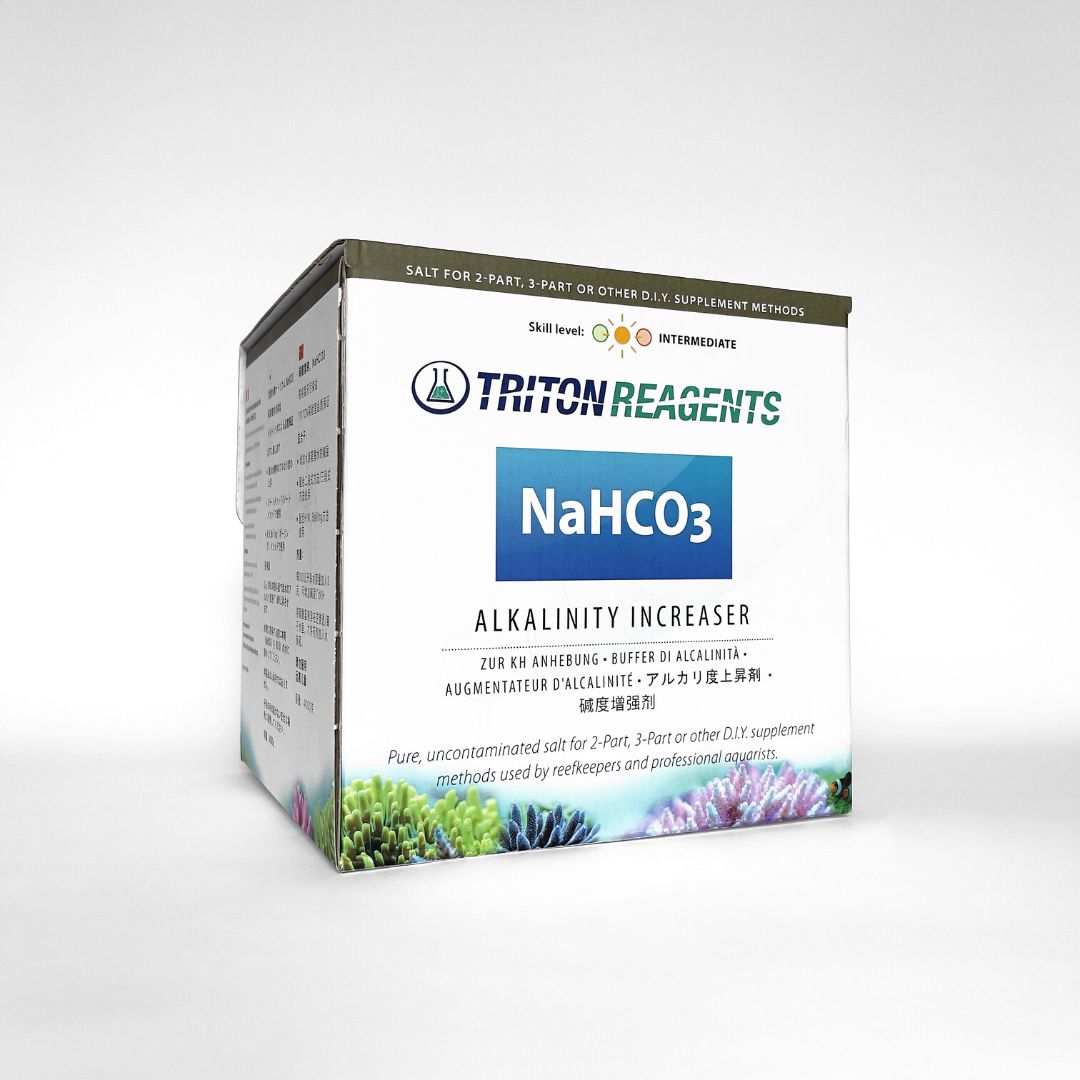
TRITON Balling
- ICP-tested purity
- Delivers CO2 if needed
- Most affordable entry point
- Low concentration
Add Infusion separately
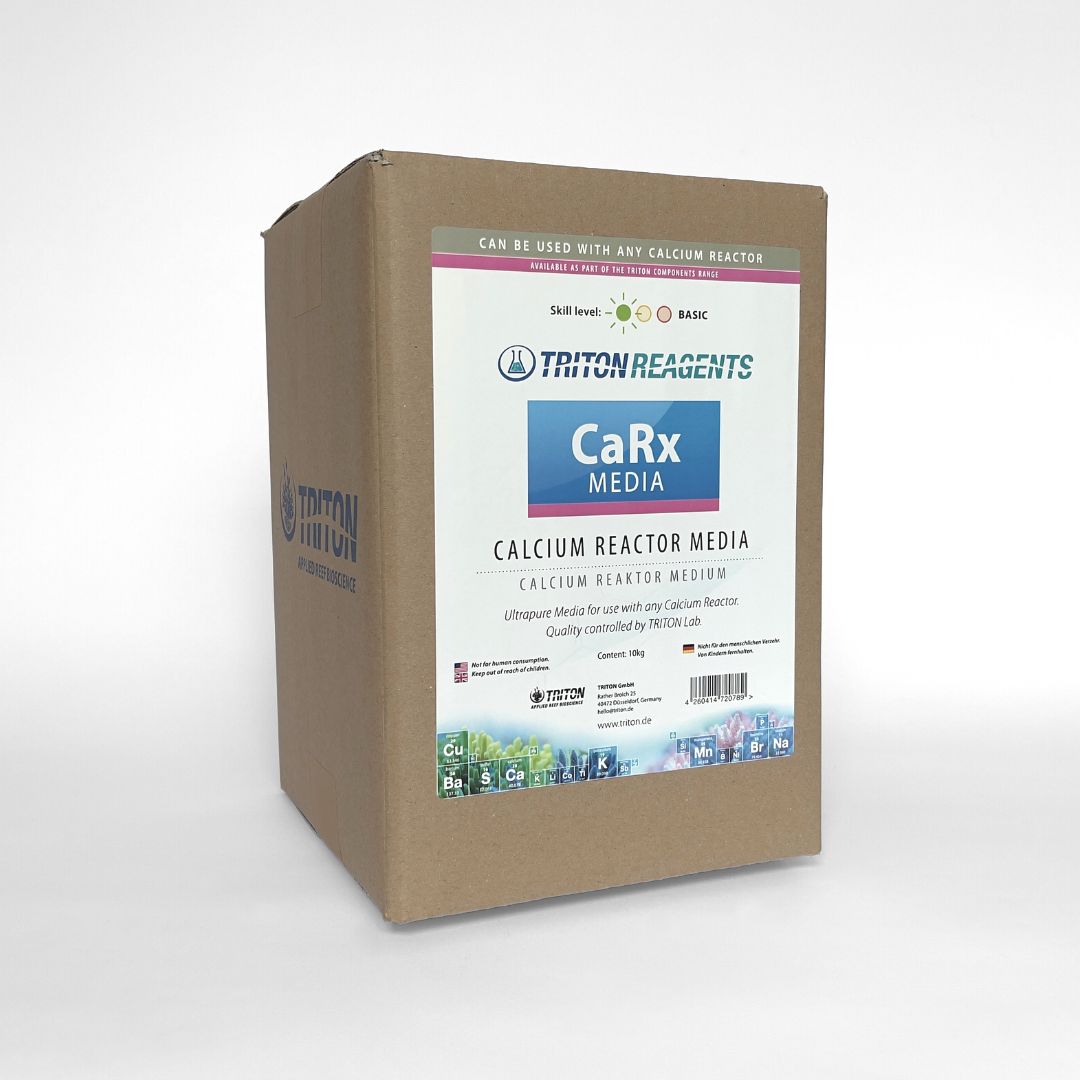
CaRx Media
- 99.9% pure CaCO3
- Lowest long-term running cost
- Near zero PO4 leach
- Requires CO2 setup
- Complex reactor management
Add Infusion separately
Every Element. Every Ratio. Precisely Balanced.
Core7 Flex — What It Contains and Why It Works
Core7 Flex Base Elements supplies calcium, alkalinity, magnesium, fluoride, strontium, potassium and all other seawater macro elements plus all essential trace elements in a single dosing platform — ionically balanced so that dosing one parameter does not create unwanted accumulation of another. The formula contains no toxic elements, no organic carbon, no phosphorus, and no silicon — the concentration is the highest available, pH-optimised for coral growth, and informed by 500,000+ ICP-OES water analyses.
19,500
dKH per set — inorganic carbon
INFUSION / essential
Trace elements included
7x
More concentrated than Balling (Powder)
Choose Your Configuration
| Configuration | Solutions | Trace Stability | Ca/Mg Separate | Starting Dose |
|---|---|---|---|---|
| 4-Part Recommended | Sol. 1 (Mg/K/Sr/F/B/Br + Traces) + Sol. 2 (Ca) + Sol. 3a & 3b (Alk) | Best | Yes | 2 ml / 100 L |
| 3-Part | Same as 4-Part but 3a + 3b combined into one alkalinity solution | Good | Yes | 2 ml / 100 L |
| 2-Part | Sol. 1 (Ca/Mg/K/Sr/F/B/Br + Traces) + Sol. 2 (Alk) | Reduced | No | 4 ml / 100 L |
All three configurations use the same salts and bottles from the same kit — so you're not cutting corners or leaving anything out just to create a 2-part system. You choose by how you combine them. Target alkalinity: approximately 7 dKH.
Mix It Yourself. Same Chemistry.
How to Prepare Core7 Flex — Step by Step
Core7 Flex Powder is 7x more concentrated than standard Balling solutions. Each kit contains labelled bags (A, B, C, D) and liquid bottles (1b). Choose your configuration below.
Solution 1 — Ionic Mix (Mg/K/Sr/F/B/Br…)
Mix the powder from Bag A + Bag D with 1× Liquid 1B into approximately 1 L of RO/DI water, then top up to a total volume of 4 L. Mix well to create a 4 L ionic solution.
Solution 2 — Calcium
Mix the powder from Bag B into approximately 1 L of RO/DI water, then top up to a total volume of 4 L. Mix well to create a 4 L calcium ionic solution.
Solution 3a — Alkalinity
Mix the powder from Bag C into approximately 1 L of RO/DI water, then top up to a total volume of 4 L. Mix well to create a 4 L alkalinity (dKH) solution.
Solution 3b — Alkalinity
Mix the powder from Bag C into approximately 1 L of RO/DI water, then top up to a total volume of 4 L. Mix well to create a 4 L alkalinity (dKH) solution.
Solution 1 — All Macroelements (Ca/Mg/K/Sr/F/B/Br)
Mix powder from bag A + bag B with 4× liquid 1b into 6,000 ml RO/DI water to make 8 litres of ionic solution.
Solution 2 — Alkalinity
Mix powder from 2× bag C + bag D into 7,720 ml RO/DI water to make 8 litres of alkalinity/dKH solution.
ICP-Tested Purity. Traditional Simplicity.
TRITON Balling — The Classic Approach
TRITON produces its own Balling salts — ICP-tested and quality controlled. No mystery ingredients, no unknown contaminants.
Alkalinity Solution
Mix 840 g TRITON NaHCO3 into 8 litres of RO/DI water, then fill to 10 litres.
Calcium Solution + Infusion
Mix 715 g TRITON CaCl2 into 8 litres of RO/DI water, fill to 10 litres. Add TRITON Infusion to this solution to run the TRITON Method.
All Other Elements — ICP-Guided
Magnesium, potassium, sulphate, strontium and all other important elements can be added after an ICP lab test — only what your reef actually needs.
TRITON Balling is the most affordable entry point. The concentration is lower than Core7 Flex, and calcium and magnesium are managed separately. It delivers CO2, which can benefit tanks with low pH.
99.9% Pure. Near Zero Phosphate.
CaRx Media — The Purest Calcium Reactor Medium
TRITON CaRx media is 99.9% pure CaCO3 — the purest reactor medium available. Near zero PO4 leach eliminates one of the most common problems with calcium reactors: unwanted phosphate introduction.
Your calcium reactor supplies calcium and alkalinity. Add TRITON Infusion separately for complete trace element coverage — and you are running the TRITON Method with reactor-based macroelements. Long-lasting and cost-effective for established systems.
Two Product Lines. One Decision.
Base Elements vs. Reef Supplements — Which Line Is Right?
Core7 Flex comes in two versions. Both share the same kit structure (A, 1b, B, 2×C, D), the same high concentration, and the same dosing flexibility. The difference is one component: 1b.
Full TRITON Method
Base Elements
Component 1B contains the macroelement solution plus TRITON Infusion, enhancing filtration efficiency when used with macroalgae systems (refugiums) — a proprietary trace element blend that defines the TRITON Method.
Choose this if: You run the full TRITON Method with a refugium and macroalgae filtration.
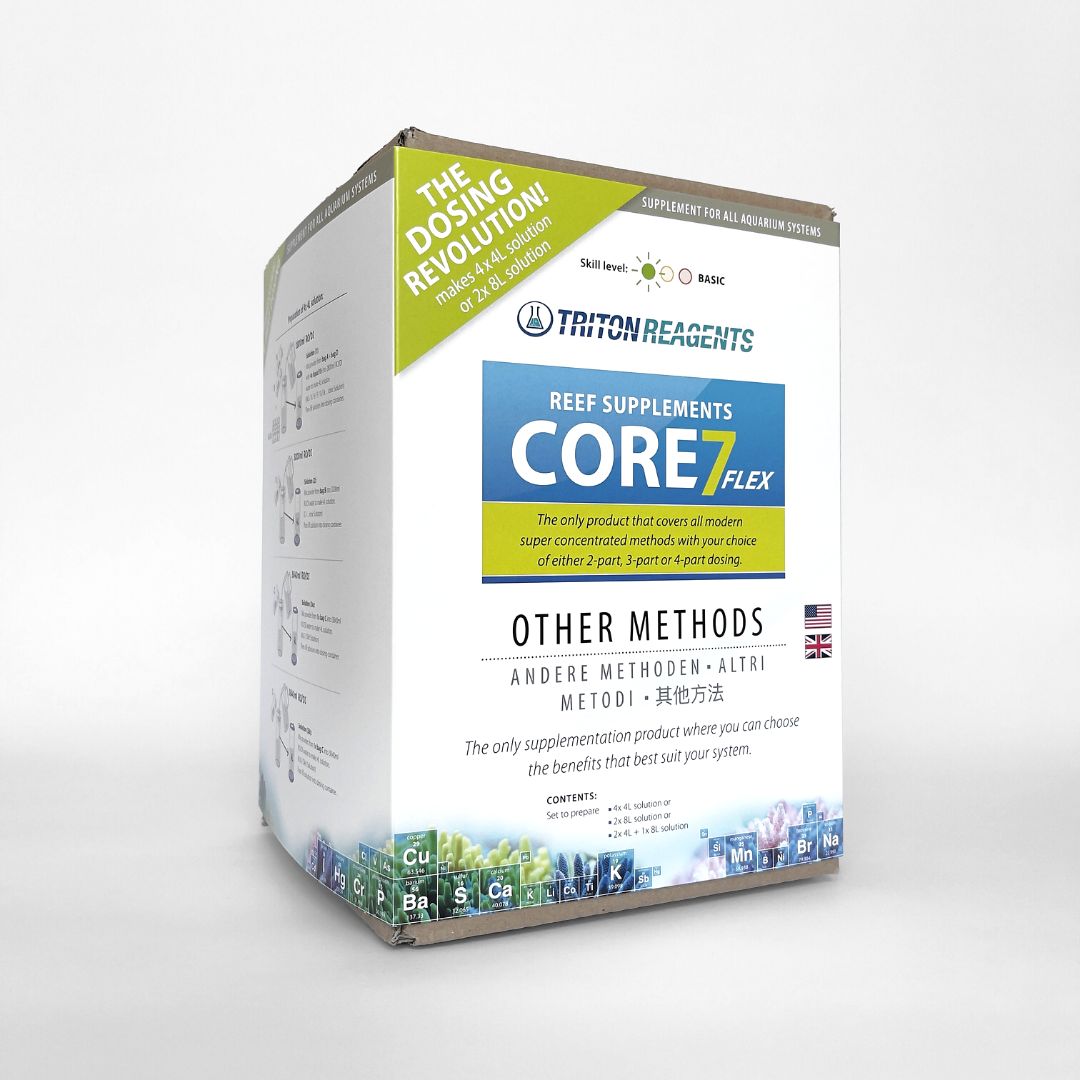
Other Methods
Reef Supplements
Component 1B contains a different set of trace elements — without TRITON Infusion.
Choose this if: You do not run an algae-based filtration system.
What Makes the TRITON Method the TRITON Method
TRITON Infusion — The Thread That Connects Every Path
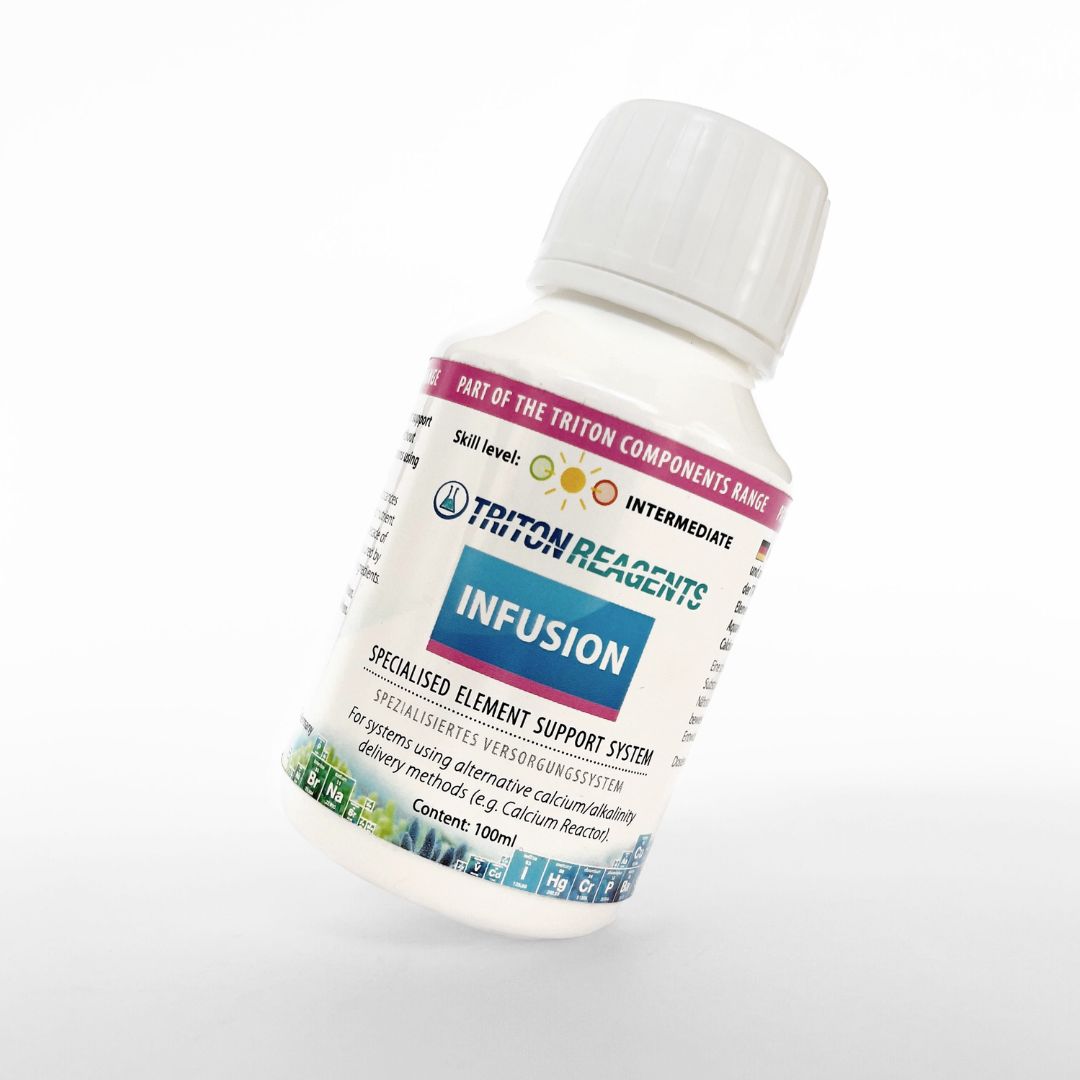
TRITON Infusion is a proprietary blend of trace elements and beneficial substances that no other product contains. It is the chemical thread that connects every dosing path to the TRITON Method.
Core7 Flex Base Elements
Infusion is included in component 1b. You are running the TRITON Method automatically.
Core7 Flex Reef Supplements
Infusion is not included. Add it separately to gain full TRITON Method coverage.
 The Chemical Core
TRITON Balling
Add Infusion to your calcium solution. Your Balling setup becomes the TRITON Method.
Calcium Reactor
Add Infusion separately alongside your reactor. Full trace element coverage.
One product. Four dosing paths. One TRITON Method. Infusion is available as a standalone product, independent of the supplementation path you choose — upgrading your calcium and alkalinity dosing into the full TRITON Method with all its benefits.
Dosing Informed by Data. Not Guesswork.
How Every Dosing Path Works With ICP Testing
Every TRITON dosing path — Core7 Flex, Balling, or CaRx — is designed to work with TRITON ICP-OES testing. This is what sets TRITON apart: not just the chemistry, but the feedback loop between lab and dosing.
Send Sample
Ship a water sample to one of 5 TRITON labs on 4 continents.
45 Parameters
ICP-OES measures at parts-per-billion precision.
Personalised Dosing
Recommendations calibrated to your reef and your dosing path.
Refine & Repeat
Each cycle makes the dosing more precise.
Your Next Step: Precision Trace Elements
From Core7 Flex to MYTE — Personalise Your Dosing
Core7 Flex, Balling, or CaRx cover the foundation — calcium, alkalinity, magnesium, and essential trace elements. But every reef is different. Some tanks consume more iodine. Others deplete strontium faster.
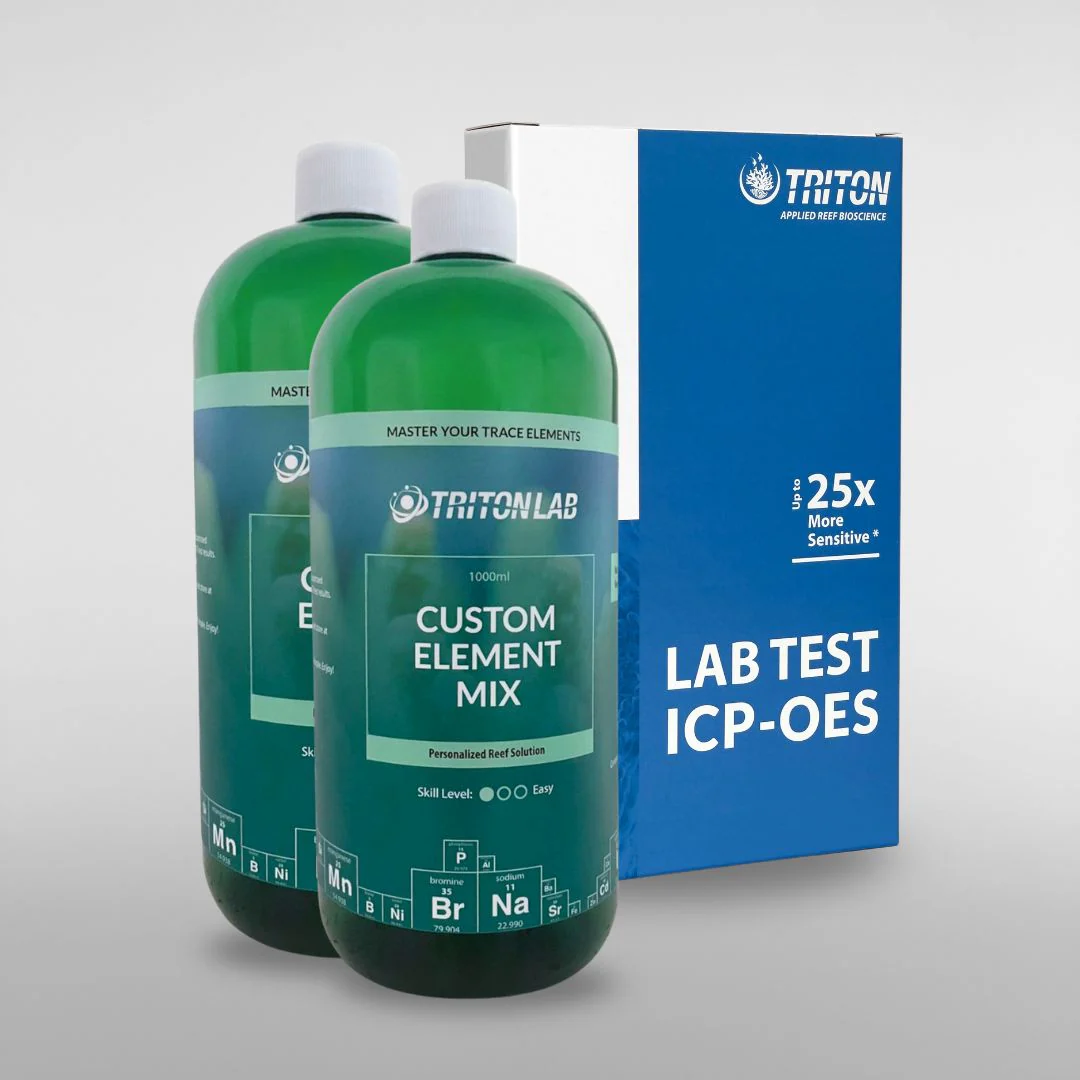
MYTE takes your ICP results and blends two personalised bottles from 11 individually measured trace elements — calibrated to your reef's exact consumption pattern. The base layer for stability. MYTE for precision. Together, the most complete dosing system available for reef aquariums.
“One of the main problems with modern reef keeping is deciding on the supplementation system for your aquarium. We solved this by offering multiple systems — all maintaining the benefits of Core7, including an improved 2-part option that is both more advanced and more affordable. TRITON the way you want.”
Ehsan Dashti, CEO of TRITON Applied Reef BioscienceCommon Questions
Frequently Asked Questions About Reef Dosing
It depends on your priorities. Core7 Flex 4-Part is recommended for best results — highest concentration, best trace element stability, and separate calcium/magnesium control. Core7 Flex 2-Part is simpler — fewer dosing pumps, easier to monitor, with known trade-offs in long-term stability. TRITON Balling is for reefers who prefer the traditional Balling method — TRITON provides ICP-tested salts and adding Infusion gives you the full TRITON Method. CaRx with TRITON media is for established calcium reactor users — lowest long-term running cost, but requires CO2 setup and reactor management experience. All four paths are ICP-guided and all connect to the TRITON Method through TRITON Infusion.
Both are high-concentration dosing platforms available in 4-Part, 3-Part, or 2-Part format. Both share the same kit structure (A, 1b, B, 2×C, D). The difference is component 1b. In Base Elements, 1b contains the macroelement and traceelement solution plus TRITON Infusion — a proprietary trace element blend. In Reef Supplements, 1b contains the macroelement and traceelement solution only, without Infusion. Choose Base Elements if you run the full TRITON Method with a refugium and macroalgae filtration. Choose Reef Supplements if you run a different approach — Balling, carbon dosing, calcium reactor, or regular water changes.
Yes — 2-Part is an officially supported configuration. It requires fewer dosing pumps and is simpler to monitor. TRITON recommends 4-Part for best results because it provides better long-term trace element stability and allows calcium and magnesium to be adjusted independently. But 2-Part is a valid option, especially for smaller or less demanding tanks. Starting dose for 2-Part is 4 ml per 100 litres.
After your ICP-OES results arrive, your MyTRITON dashboard provides personalised dosing recommendations.
Starting doses: 4-Part and 3-Part: 2 ml per 100 L of tank volume per day. 2-Part: 4 ml per 100 L per day.
Target alkalinity: Build toward approximately 7 dKH — an optimal level for most reef systems, where corals calcify efficiently and trace element consumption remains predictable.
Initial adjustment phase: Test your alkalinity (dKH) daily and adjust dosing accordingly:
- If alkalinity rises, reduce dosage by 10–20%
- If alkalinity drops, increase dosage by 10–20%
Continue fine-tuning until alkalinity stabilises around 7 dKH.
Once stable: Test every 3 days to monitor for any required adjustments.
Ongoing monitoring: After the initial setup, re-test with ICP after 2–3 weeks to evaluate system response. Adjust dosing as needed, then move to ICP testing every 2–3 months once the system is stable.
TRITON Infusion is a proprietary blend of trace elements and other beneficial substances. It is the chemical component that helps define the TRITON Method and supports the refugium and filtration framework efficiently enough to eliminate the need for water changes when used as part of the full system. It also serves as the connecting element across all four TRITON dosing paths.
Core7 Flex Base Elements already include Infusion in Component 1b. However, Infusion is also available as a standalone product — allowing reef keepers using Core7 Reef Supplements, Balling, or a calcium reactor to add it separately and achieve full TRITON Method trace element coverage.
Infusion transforms any dosing approach into the TRITON Method.
Yes. TRITON produces its own ICP-tested Balling salts (NaHCO3 for alkalinity, CaCl2 for calcium). Mix them following the TRITON Balling instructions, then add TRITON Infusion to the calcium solution. Your Balling setup now delivers the full trace element coverage of the TRITON Method. Magnesium, potassium, and other elements are added individually based on your ICP-OES test results — only what your reef actually needs.
TRITON CaRx media is 99.9% pure calcium carbonate — the purest reactor medium available. Near zero PO4 leach eliminates unwanted phosphate introduction, which is a common problem with lesser-grade reactor media. No unwanted contaminants and very low leftover after use, reducing pipe blockage. Combined with TRITON Infusion dosed separately, your calcium reactor becomes part of the TRITON Method.
Yes. A number of public aquariums use this approach because it provides full control over pH stability.
Core7 delivers a higher pH solution, while a calcium reactor produces a lower pH output.
We recommend starting with a 50/50 ratio and then adjusting to achieve your desired pH level.
Two-part dosing maintains calcium and alkalinity — two essential parameters. Core7 Flex goes further. It supplies calcium, alkalinity, magnesium, and all essential trace elements — including the proprietary TRITON Infusion blend — in one integrated system. Combined with ICP-OES testing, it monitors 45 parameters (not just two) and provides personalised dosing guidance. Both approaches can keep corals alive. Core7 Flex is designed to help them thrive.
Core7 Flex Powder is a concentrated powder format that you mix with RO/DI water at home. Each kit contains labelled bags (A, B, C, D) and liquid bottles (1b).
Solution 1: Mix the powder from Bag A + Bag D with 1× Liquid 1B into approximately 1 L of RO/DI water, then top up to a total volume of 4 L. Mix well to create a 4 L ionic solution.
Solution 2: Mix the powder from Bag B into approximately 1 L of RO/DI water, then top up to a total volume of 4 L. Mix well to create a 4 L calcium ionic solution.
Solution 3a & 3b: Mix the powder from Bag C into approximately 1 L of RO/DI water, then top up to a total volume of 4 L. Mix well to create a 4 L alkalinity (dKH) solution.
For established TRITON Method users, a TRITON ICP-OES analysis every 2–3 months is recommended. The standardised system keeps parameters stable between tests. New setups, recently changed dosing amounts, or tanks experiencing problems benefit from more frequent testing — monthly until the system is stable. Between ICP tests, monitoring alkalinity with a home test kit is useful to track daily consumption. The target alkalinity for Core7 Flex is approximately 7 dKH. For a deeper look at your reef's organic chemistry, consider a TRITON N-DOC test.
Your Next Step
Start Your Reef Dosing Journey
Four paths. One integrated system. Choose yours.