Pioneers of ICP Testing — Since 2008
Water Test Kit for Reef Aquariums — Lab-Grade Analysis
Mail in a sample and get 45 parameters analyzed at parts-per-billion precision. Know exactly what your reef needs and discover what might be holding back your success.
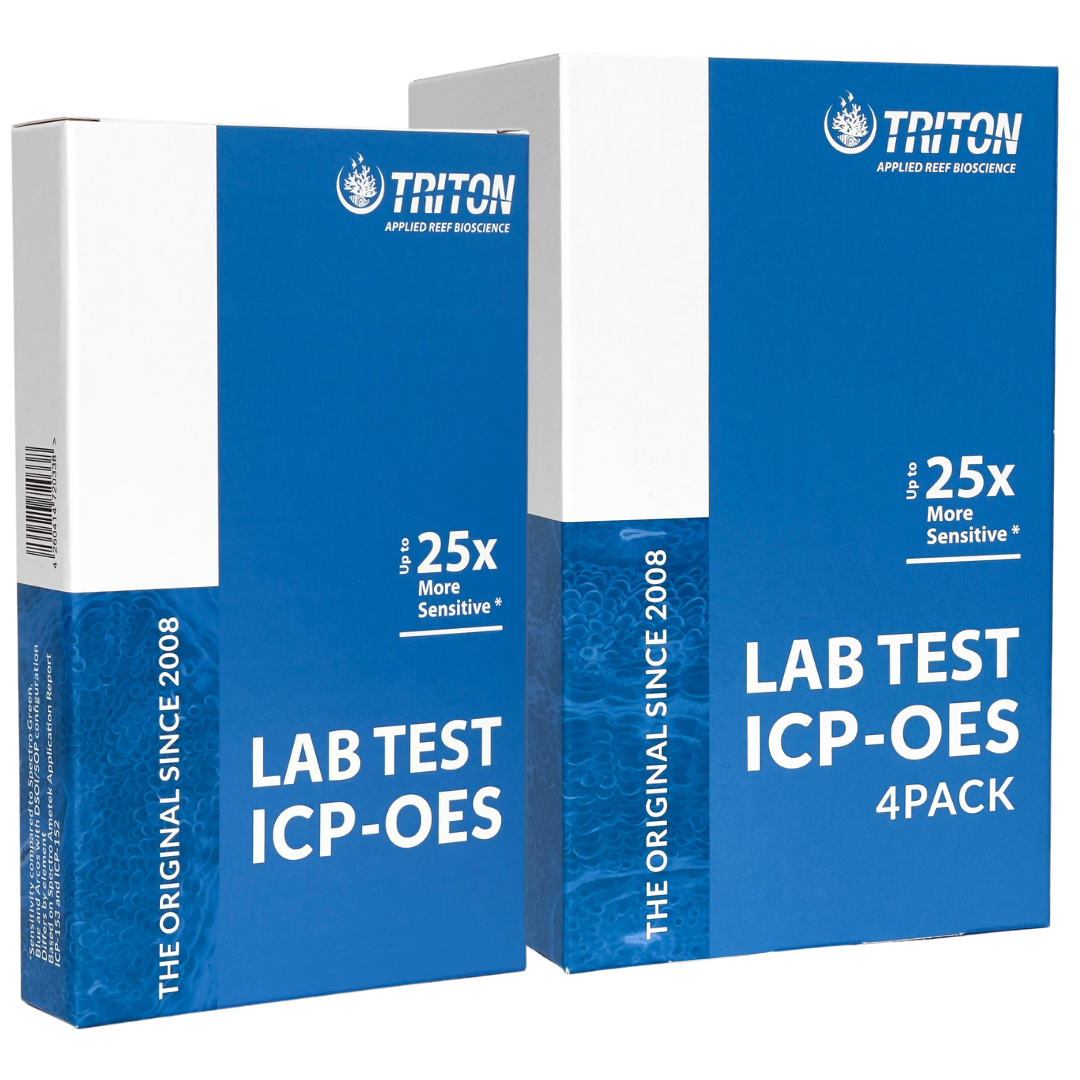
The Gap in Your Data
Why Standard Test Kits Fall Short
You test calcium. Alkalinity. Maybe magnesium. But your reef depends on dozens of elements you can't measure at home — trace metals at concentrations a thousand times smaller than what any standard kit can detect.
Heavy metals that slowly poison corals. Organic compounds that fuel invisible problems. An ICP test doesn't replace your home kit. It reveals everything your home kit is blind to.
The result: Most reef problems that "appear suddenly" were brewing for weeks — silently, below what any home test can see.
Standard Home Kit
Parameters
- pH, KH, Calcium, Magnesium
- Nitrate, Phosphate
- Parts per million (ppm)
- Colour-matching subjective
TRITON ICP Analysis
Parameters
- All major & trace elements
- Heavy metals detected
- Parts per billion (ppb)
- Personalised recommendations
- Habitat-specific — tailored to match the animals you keep
45 Elements. Five Groups. Full Picture.
What Does a TRITON ICP Test Measure?
ICP-OES (Inductively Coupled Plasma Optical Emission Spectrometry) is a laboratory technique that breaks reef aquarium water into light — each element emitting a unique wavelength, measured at parts-per-billion precision. TRITON's ICP analysis covers 45 parameters across five groups.
Macro Elements
Sodium, Calcium, Magnesium, Sulfur, Bromide, Boron, Potassium, Strontium, and more — these major ions define your seawater. Yet most of them are only detectable through ICP lab testing.
Trace Elements
The micronutrients your corals need certain amounts. Too little stunts growth, too much causes stress. Invisible to standard tests, the only way to know for sure is through ICP testing.
Unwanted Metals
Even at parts-per-billion, these can stress or kill corals. They enter through equipment, salt mix, or tap water — and accumulate silently. Your home kit cannot see them. We can.
Nutrients
Phosphorus and phosphate — the key indicators of nutrient load that fuel algae growth when elevated and limit coral growth when depleted.
Others
Salinity provides the context for all other measurements — a baseline that's invaluable in reefkeeping.
Four Steps to Clarity.
Mail In Your Water Sample — How It Works
Getting a TRITON ICP analysis takes four steps: order a test kit, collect a water sample, ship it to the nearest of 5 labs worldwide, and receive 45-parameter results with personalized recommendations — typically within 24–48 hours of arrival.
Order
Get your test kit from an authorised TRITON dealer worldwide. Includes everything you need — 3 sample vials, a barcode for registration, and in the USA prepaid return packaging.
Collect
Rinse all vials 3× directly in your aquarium, then fill and seal them. Register the barcode online. Takes two minutes — no equipment or chemistry knowledge needed.
Ship
Seal and post your sample to the nearest of our 5 labs worldwide. The lab on your continent handles your analysis — no transatlantic delays.
Receive Your Results
Results in approximately 24–48 hours after your sample arrives at our lab. Get a full analysis — 45 parameters — with personalized recommendations based on 500,000+ samples and years of research on the Great Barrier Reef.
Register Before You Ship.
Done in 2 Minutes — On Any Device
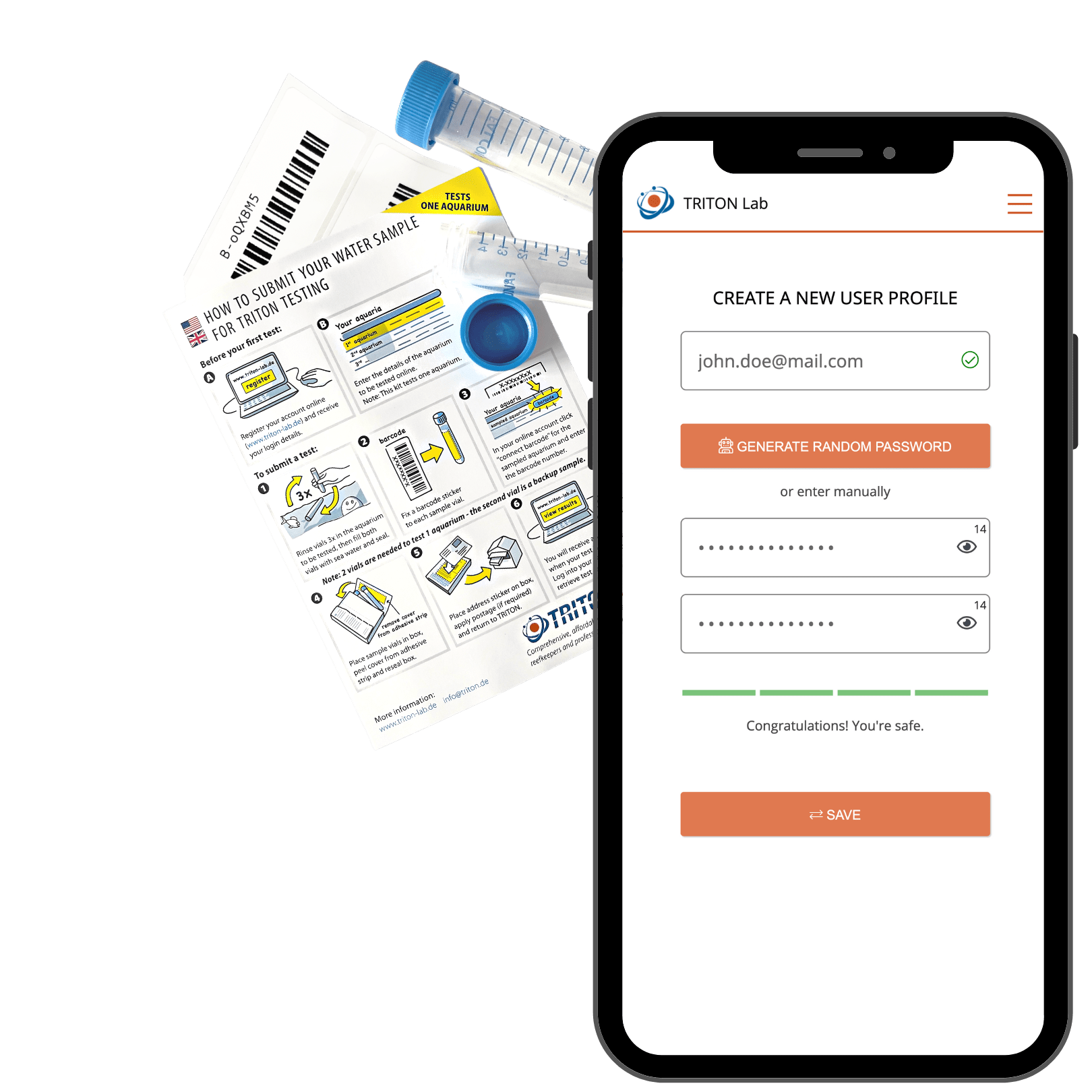
- Create an account at triton-lab.de/en/register and confirm it by email.
- Log in, create your virtual aquarium and connect your barcode.
- Take your water sample — plus a backup — directly from your aquarium.
- Submit online and ship. You'll receive an arrival notification and results within 1–3 days.
Tips from our laboratories
- Follow the four steps in exact order — skipping any step will delay processing.
- Make sure the return address on your package is legible and complete.
- Add your address to your profile after registration so we can reach you quickly if needed.
- Connect the barcode before shipping — without it, automatic result upload is not possible.
See It in Action.
How ICP Testing Works
Not Just Data — Direction.
Understanding Your ICP Results
Every TRITON analysis delivers more than just data. Your results are compared against our database of 500,000+ analyses, your tank's specific habitat type, and our years of research on the GBR. You'll see exactly which elements are in range, which need attention, and what to dose — and how important each adjustment is depending on the animals you keep.
No guesswork. No conflicting advice from forums. Just clarity.
Element-by-Element Breakdown
Every measured parameter is shown against its ideal range — color-coded, ranked by priority, matched to the habitat you recreate, and even considering specific problems you can choose to account for.
Personalised Dosing Recommendations
Specific product and dosage instructions based on your tank volume and current values.
Trend Tracking Over Time
Compare results across tests to see how your water chemistry evolves — and catch drift before it causes problems.
See a Real Analysis
Browse an actual TRITON result — all 45 parameters, recommendations included. Open Sample Results
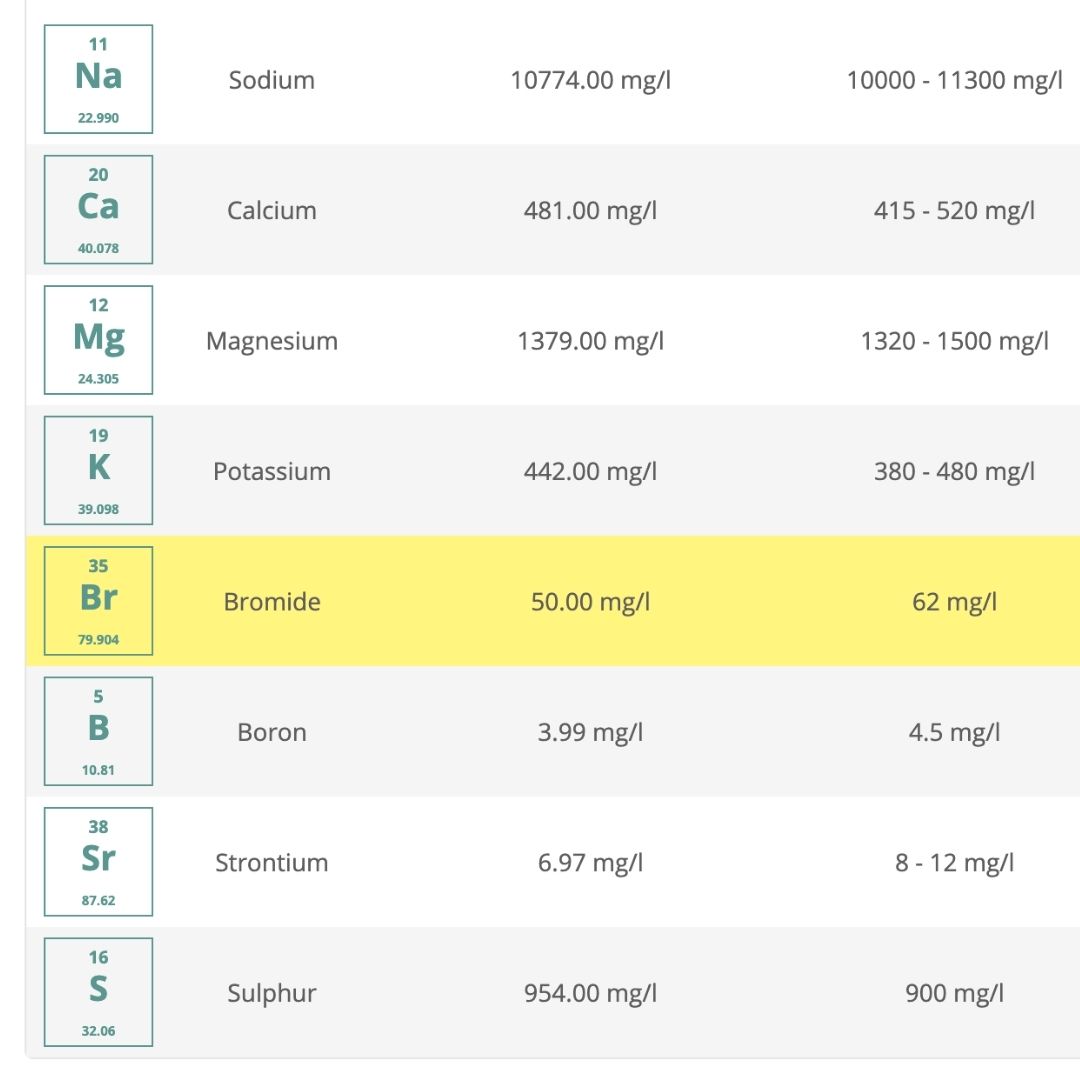
Element Table
Every element compared against its target range — irregularities highlighted at a glance.
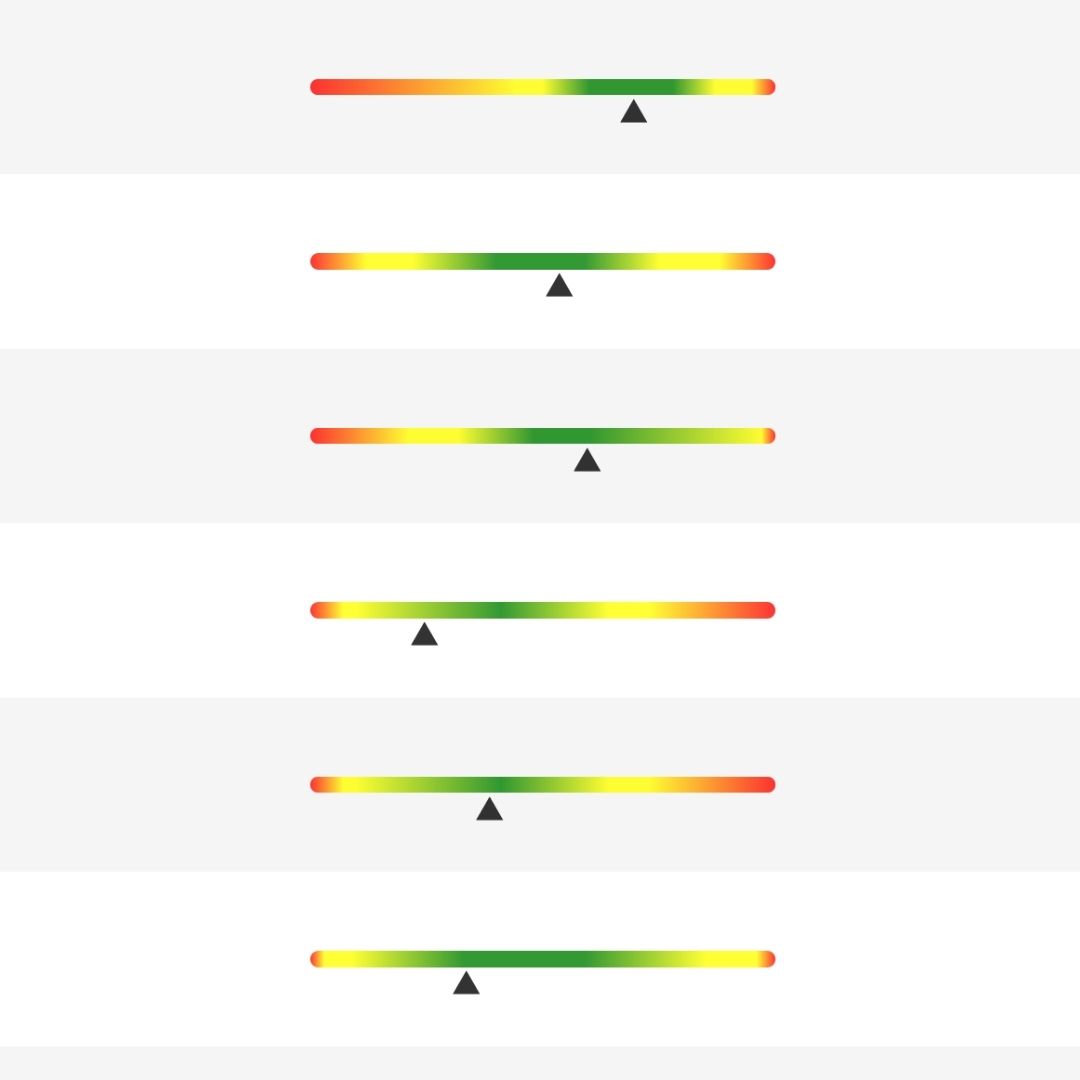
Visual Bar Graphs
Colour-coded indicators for every parameter — see instantly what's in range and what needs attention.
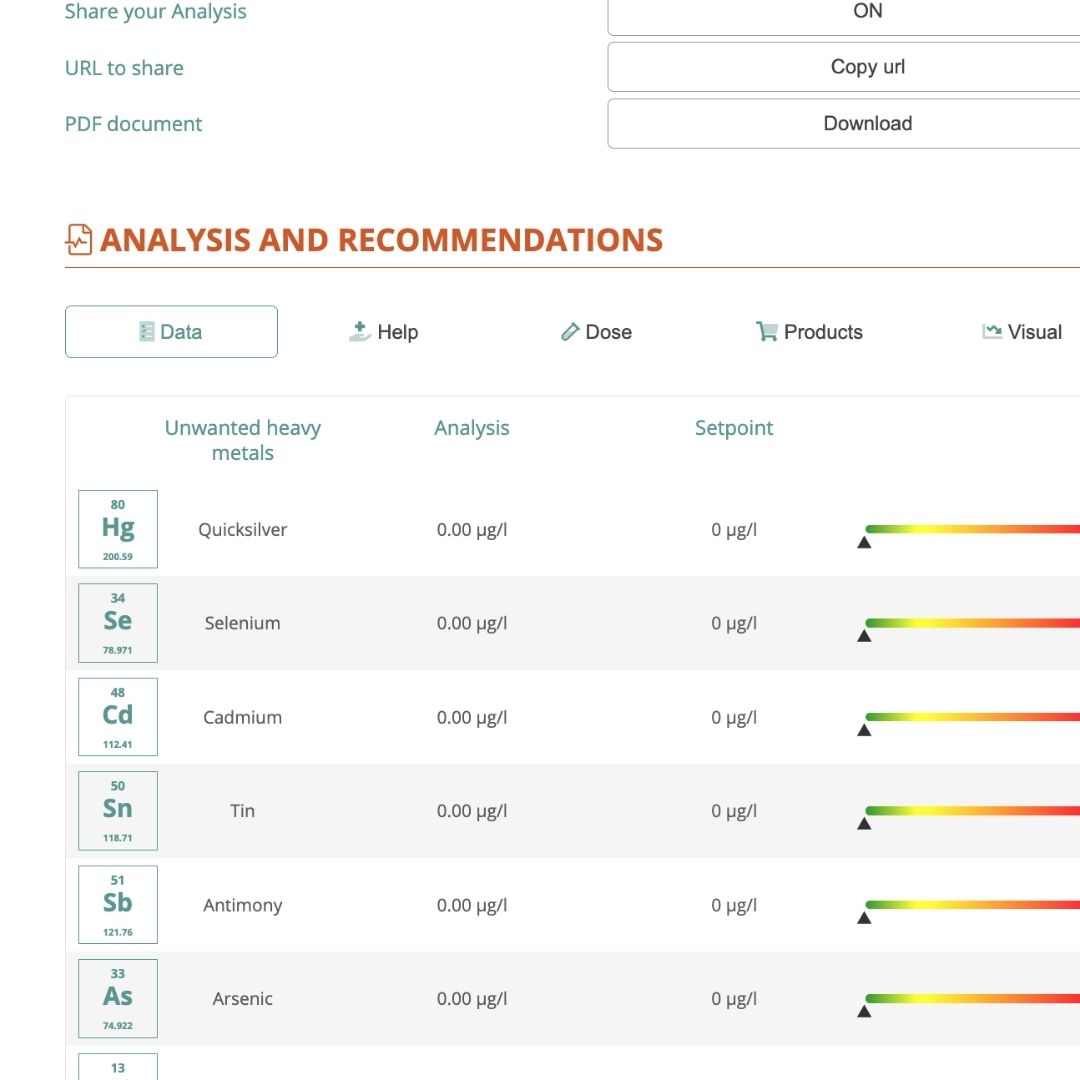
Analysis & Recommendations
Analysis, diagnosis and product recommendations — all from one source, in one report.
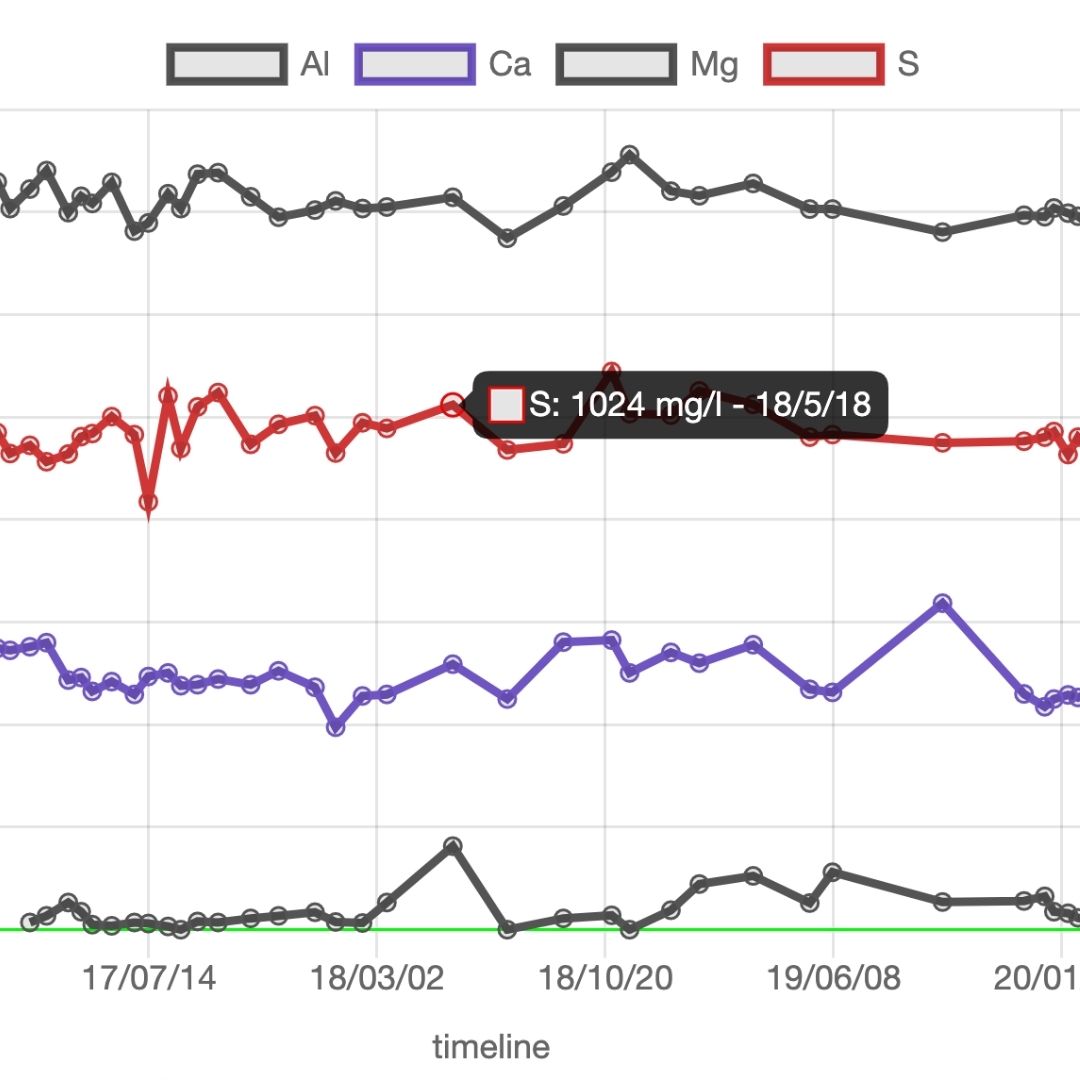
Trend Charts
Track every element over time — see how your water chemistry evolves and catch drift early.
PDF & CSV Export
Download your full results as a PDF for your records, or export as CSV for deeper analysis.
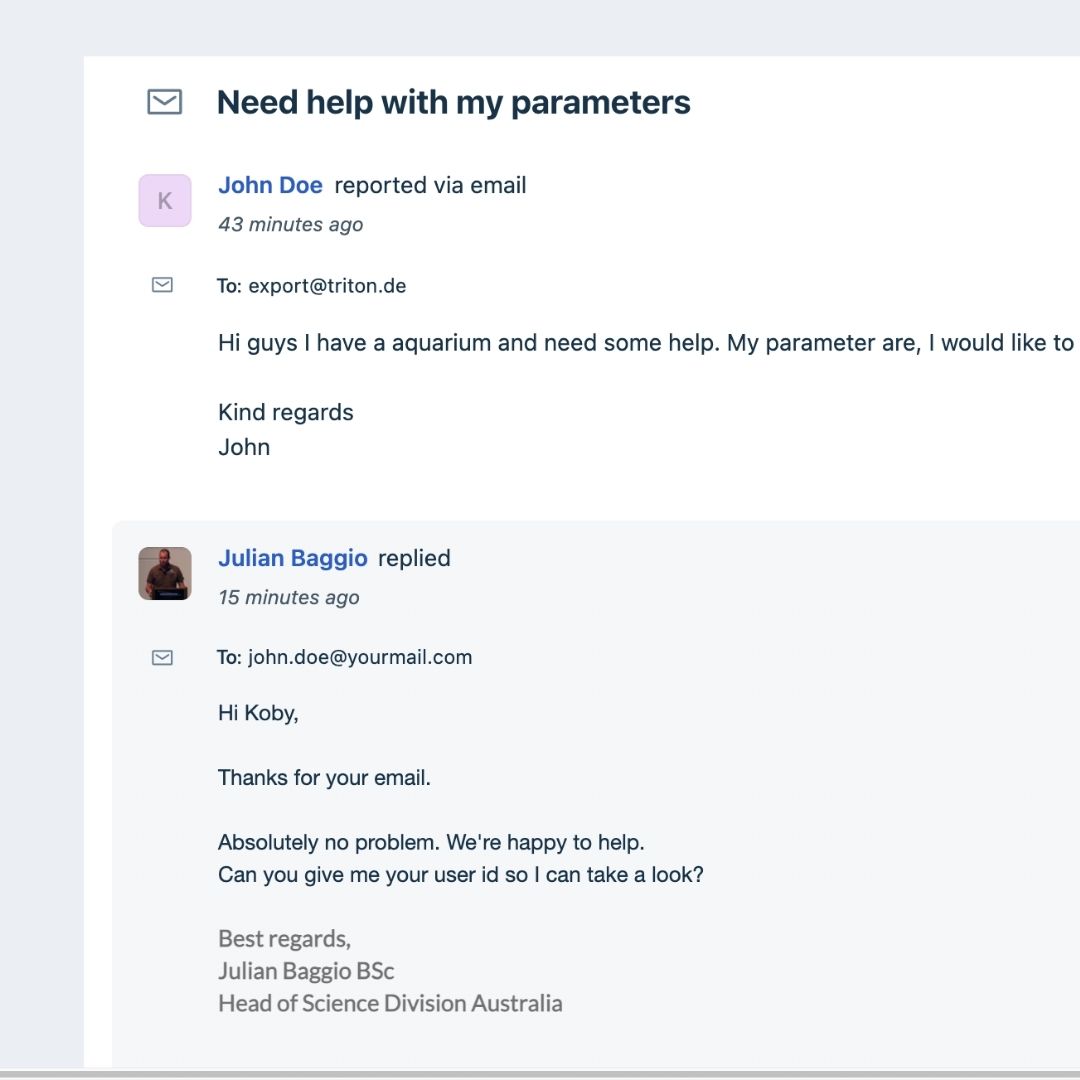
Expert Support
Questions about your results? Our science team is available to guide you — personally.
Personalised to Your Aquarium Type
What's Your Habitat Type?
When your results are ready, you choose your habitat type directly on the results page. TRITON then calculates set points, element amounts, and dosing recommendations tailored to the animals in your care. Combined with the Problem Selector — where you can flag issues like cyano, RTN/STN, poor growth, nuisance algae, or poor color — the recommendations become even more specific to your situation.
Problem Selector — also available on your results page
What No Element Test Can Show.
N-DOC — Go Beyond Elements
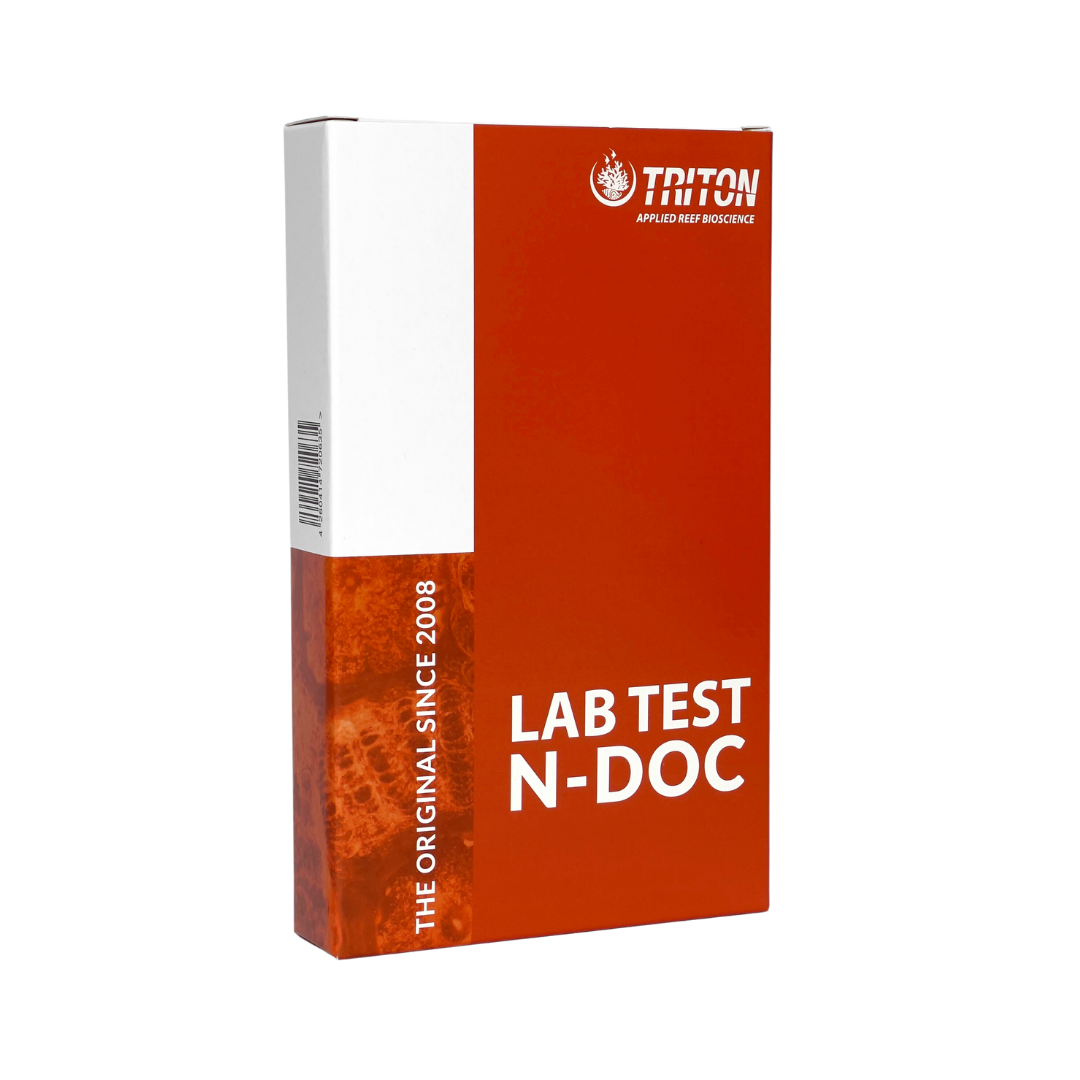
Most water tests stop at inorganic elements. N-DOC goes further — measuring the organic carbon compounds that drive algae, bacterial imbalances, and invisible stress in your reef.
TRITON's N-DOC is the only quantitative organic carbon test in aquaristics. Available as a separate test alongside your ICP analysis.
Your Results. Your Formula.
MYTE — From Test Results to Custom Supplements
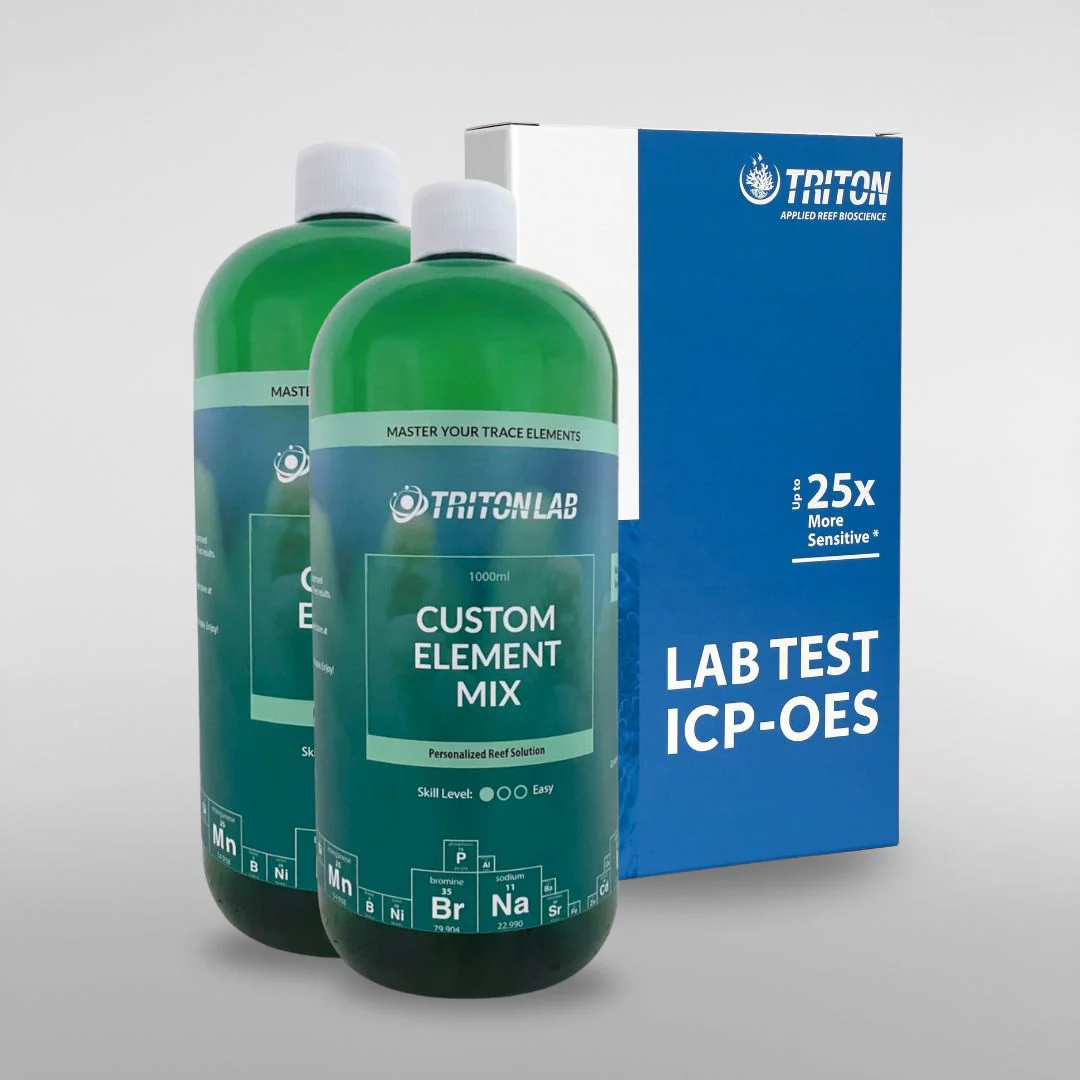
What if your ICP results could automatically become a personalised supplement blend? MYTE takes your latest analysis, selects from 15 trace elements, and creates two bottles — Macro Elements and Trace Elements — calibrated to your reef's exact needs.
Adjusted with every ICP test. No measuring, no mixing, no guessing. Just dose and observe.
- 15 trace elements in one subscription
- Two bottles: Macro + Trace Elements
- Recalculated with every ICP analysis
- Delivered to your door, adjusted monthly
Global Precision, Local Speed.
Five Labs, Four Continents
TRITON operates 5 ICP-OES laboratories across Germany, the USA, Australia, and beyond. Your sample goes to the nearest lab — meaning faster turnaround, no transatlantic shipping delays, and results backed by the largest reef water database in the world.
Every result is measured against 500,000+ analyses — including reference data collected directly at the Great Barrier Reef. That's context no other service can provide.
"We built TRITON's ICP testing to give reef keepers the same analytical precision that marine biologists use in the field. Every result draws on 500,000 samples and reference data from the Great Barrier Reef — that depth of context is what turns numbers into answers."
— Ehsan Dashti, CEO of TRITON Applied Reef Bioscience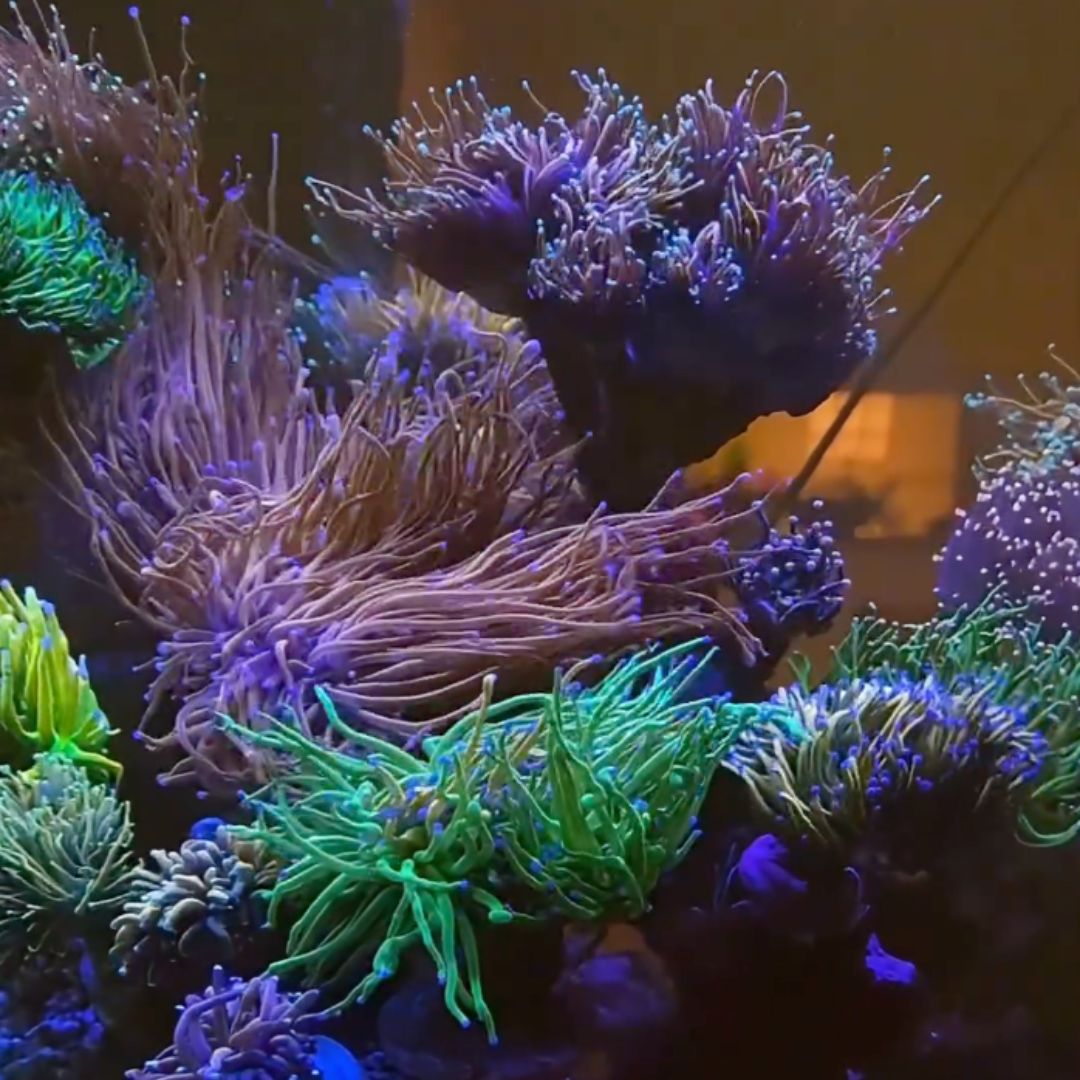
"I was losing corals and couldn't figure out why — my home tests all looked fine. My first TRITON ICP revealed copper contamination from my plumbing. Fixed it in a week. Haven't lost a coral since."
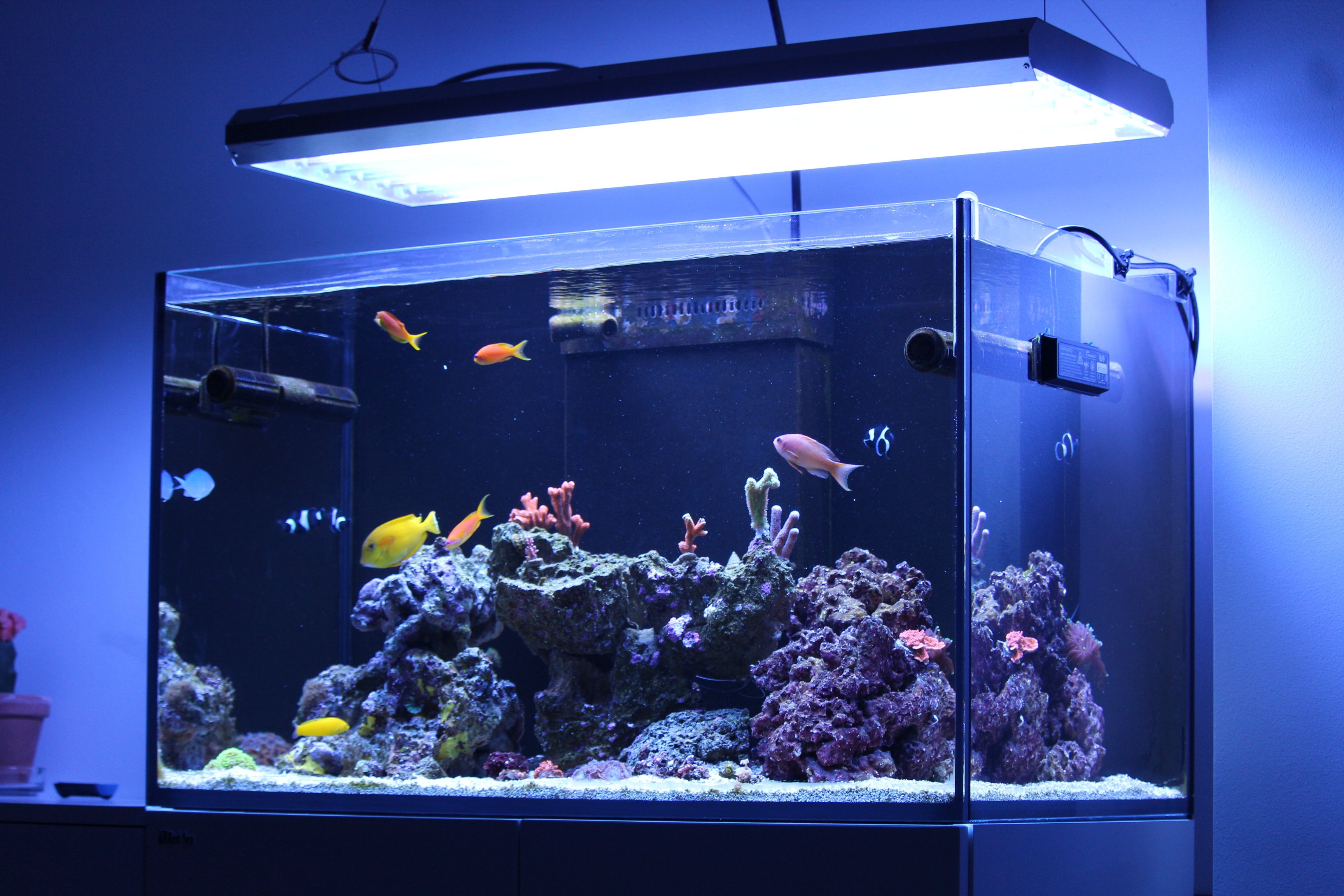
"Running 20+ tanks on TRITON. The consistency across all systems is remarkable — same method, same results, every time. Our growth rates improved 40% after switching."
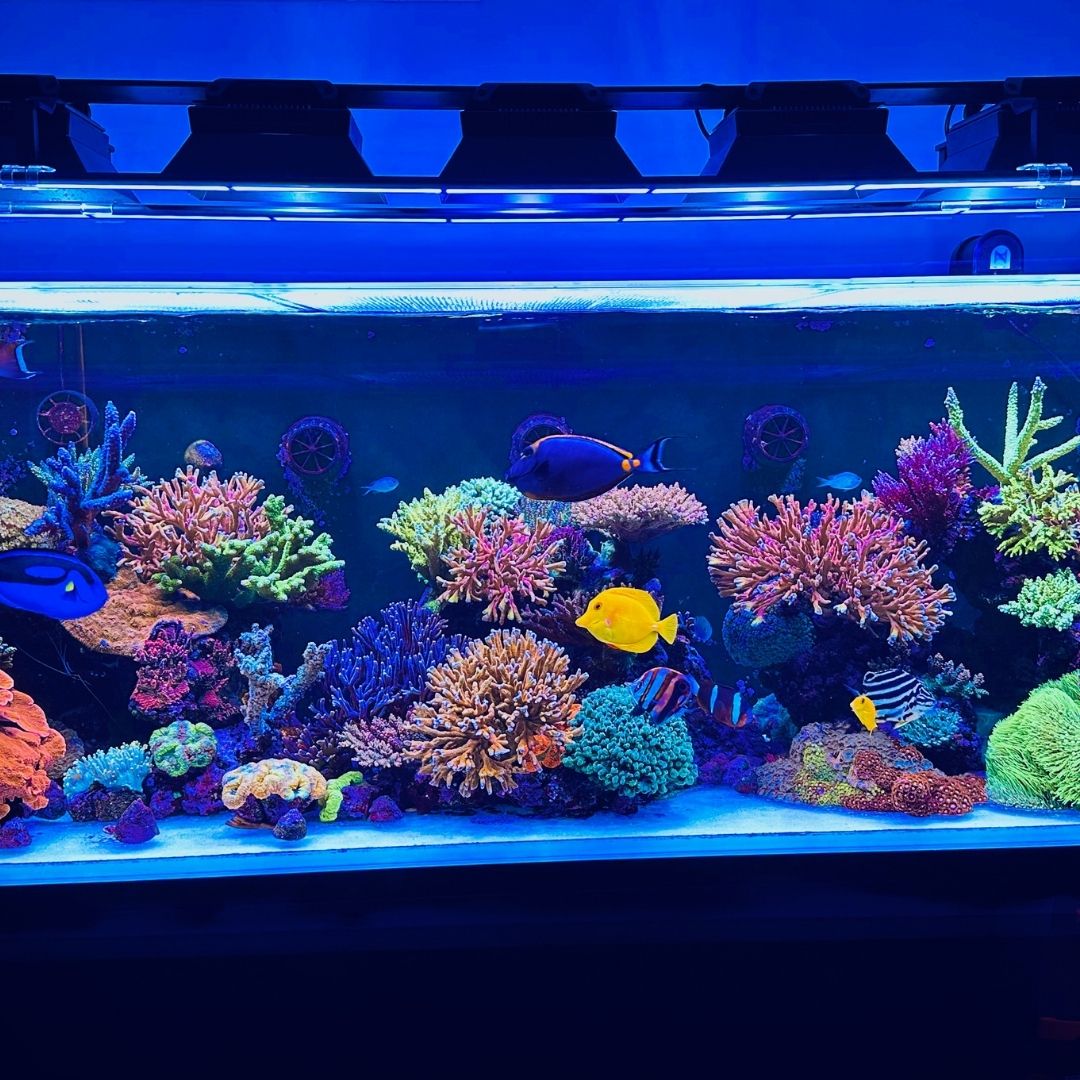
"I switched from Balling after 3 years. Was terrified of losing corals during the transition. Followed the migration guide — zero losses. MYTE simplified my daily routine to 30 seconds."
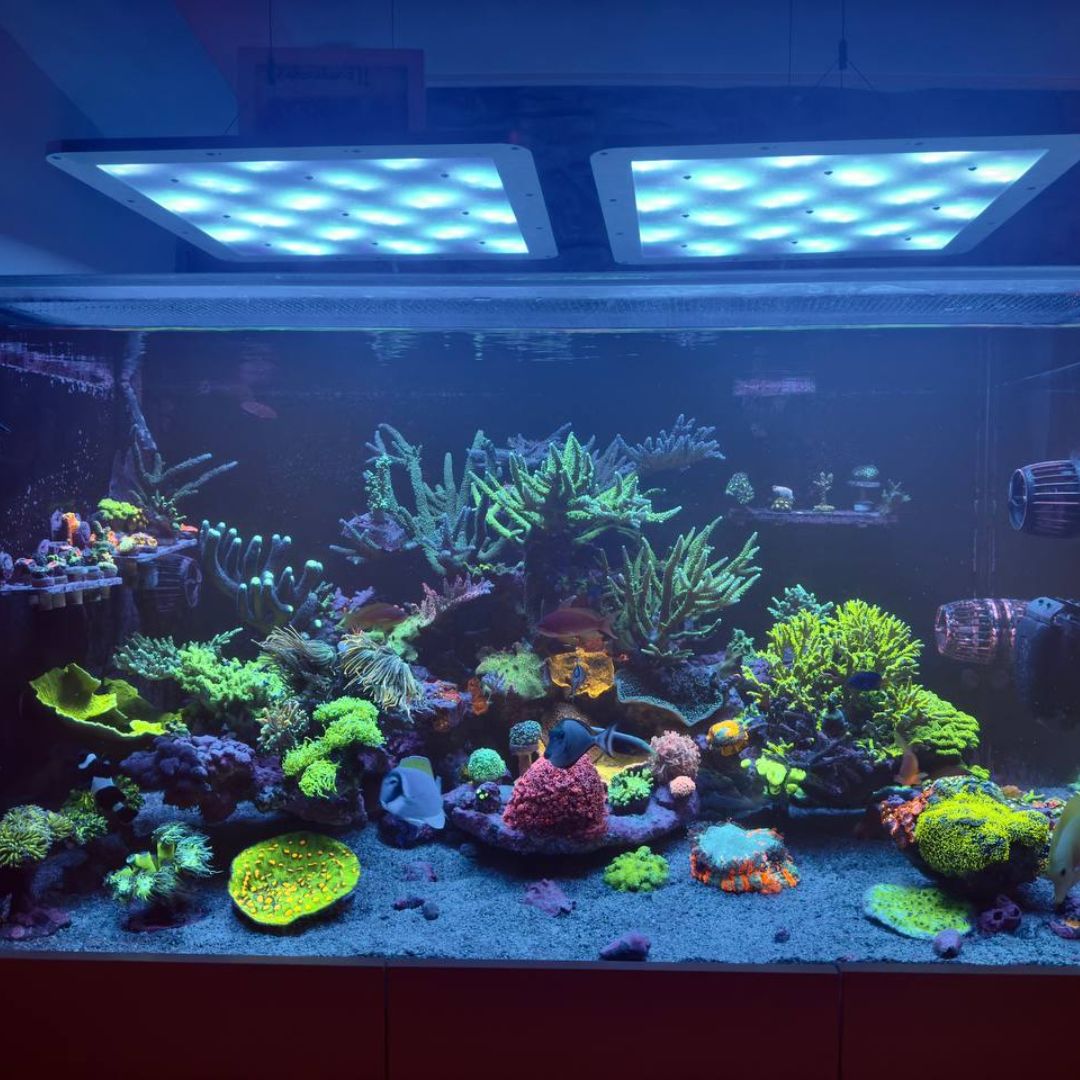
"2 years, zero water changes. My tank has never looked better. The N-DOC test showed me organics I didn't know existed — that was the game changer for my SPS colours."

Live Every Sunday
Ask Ehsan DirectlyEvery Sunday, TRITON founder and CEO Ehsan Dashti answers your questions live — about reef chemistry, ICP results, and the TRITON Method. We announce each session with the exact time on our channels. Follow us so you never miss one.
Your Questions Answered.
Frequently Asked Questions
ICP-OES (Inductively Coupled Plasma — Optical Emission Spectrometry) is a laboratory water analysis that measures 45 elements in your reef aquarium water at parts-per-billion precision. Unlike home test kits that measure 5–8 basics, ICP reveals the full picture — including trace elements and heavy metals invisible to standard kits. You mail in a water sample and receive detailed results with personalised recommendations.
Order a TRITON test kit from an authorised dealer. Rinse all vials 3× in your aquarium, fill and seal them, then register the barcode online. Pack them in the return envelope and send to the nearest TRITON lab. Results in approximately 24–48 hours after your sample arrives at our lab — including personalised dosing recommendations.
Results in approximately 24–48 hours after your sample arrives at our lab. With 5 labs on 4 continents, your sample goes to the nearest location — minimising shipping time and getting your results to you as quickly as possible.
Home test kits use colorimetric reactions to estimate 5–8 common parameters (calcium, alkalinity, pH, etc.) with parts-per-million accuracy. An ICP-OES analysis uses laboratory spectrometry to measure 45 elements at parts-per-billion precision — including trace elements and heavy metals your home kit can't detect. Think of it as the difference between a basic check-up and a full blood panel.
For those following the complete TRITON Method, an ICP test every 2–3 months is recommended. This frequency is sufficient to track trends and catch problems early. New tanks, tanks experiencing issues, or high-value coral collections may benefit from monthly testing. Non-method users or those just starting out should test more frequently to establish a baseline.
The best ICP test combines comprehensive element coverage, high precision (ppb, not ppm), fast turnaround, and — critically — actionable recommendations based on a large reference database and expert knowledge.
TRITON's analysis measures 45 elements, is built on over 500,000 sample analyses, and is backed by the pioneering ICP trace element company with the only dedicated research and development facility in the industry at the Great Barrier Reef. It also includes personalised dosing guidance tailored to your specific aquarium.
ICP-OES (Optical Emission Spectrometry) and ICP-MS (Mass Spectrometry) are both laboratory techniques for measuring elements in water. TRITON chose ICP-OES (Optical Emission Spectrometry) after extensive evaluation because it provides the optimal balance of precision, reliability, and matrix tolerance for seawater analysis.
ICP-MS can detect elements below 1 ppb, but this level of sensitivity is not practically relevant for aquarium husbandry — in many cases, it is overkill. It also requires sample dilution, which can introduce additional cost and potential sources of error.
Saltwater is a highly complex, high-salinity matrix, and ICP-MS can be affected by matrix interferences that may impact accuracy. ICP-OES, by contrast, is well-suited for high-matrix samples and delivers reliable parts-per-billion precision across 45 parameters.
With over 500,000 saltwater samples analysed, TRITON's ICP-OES methodology is extensively validated for this specific application. Both technologies far exceed the capabilities of any home test kit.
For a complete picture of your reef's water chemistry, a laboratory ICP-OES analysis is the most accurate option available to hobbyists. It measures 45 elements at parts-per-billion precision — detecting trace concentrations that are completely invisible to standard colorimetric home test kits. Home kits are useful for daily monitoring of basics like alkalinity and calcium, but an ICP analysis reveals the full spectrum — including trace elements, heavy metals, and with TRITON's exclusive N-DOC add-on, organic compounds that no other test can measure.
500,000+ Reef Water Analyses. One Test Kit.
Your Reef Is Telling You Something.
An ICP analysis is the only way to hear it clearly — 45 parameters, parts-per-billion precision, and personalised recommendations from the world's largest reef water database.