Coral Treatment Dosing Calculator
Coral Treatment DosingCalculator
TRITON RTN-X, STN-X, and CYA-No are targeted coral treatment products that address RTN, STN, and cyanobacteria. Enter your N-DOC test values and aquarium volume below to calculate precise dosages for intensive and daily treatment protocols.
Calculate Your Treatment Dosage
Enter Your N-DOC Values
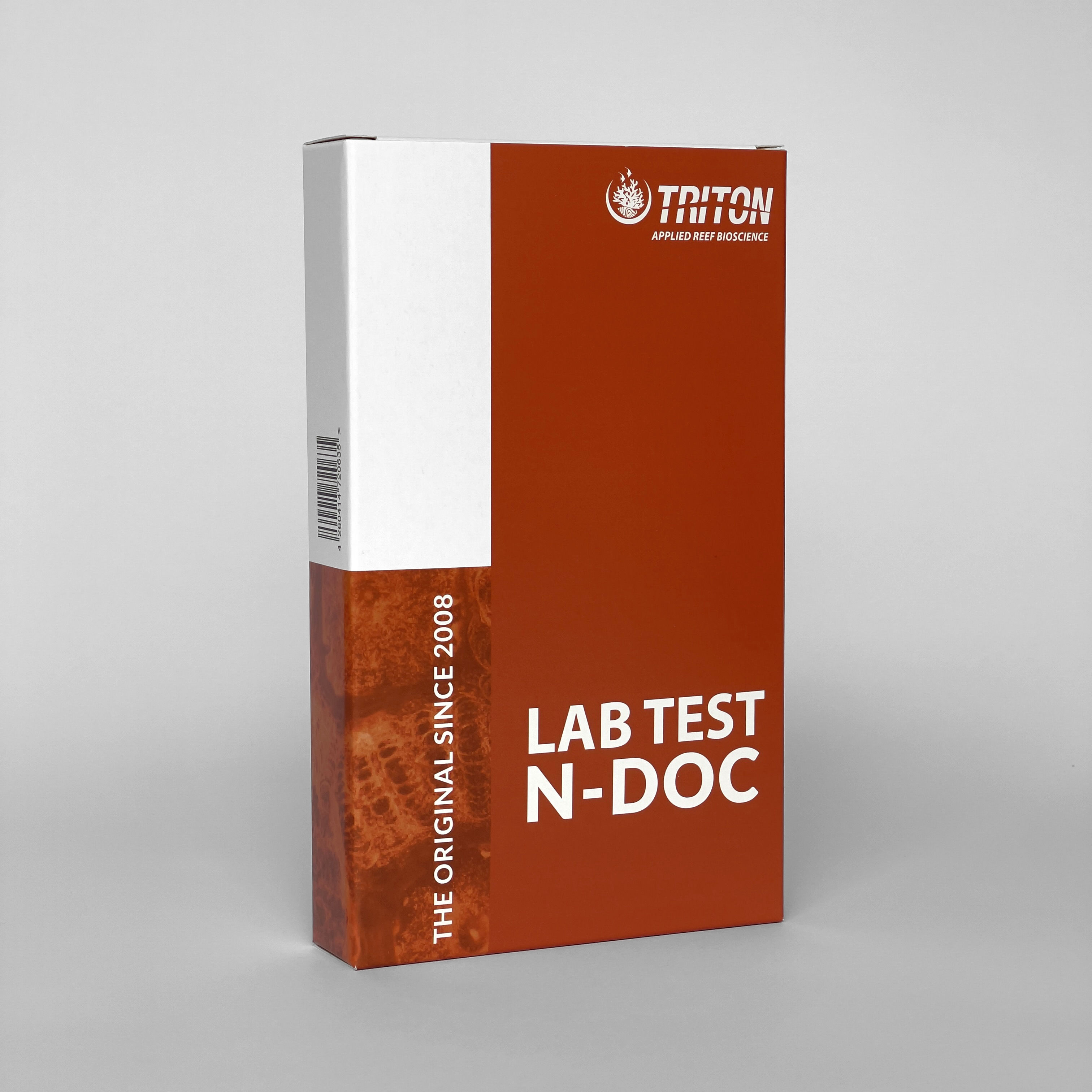
All three treatment calculators share the same inputs: nitrogen (N) from your N-DOC test results, and phosphorus (P) from your ICP test results, or home testing, plus your aquarium volume in litres. Results appear automatically as you type.
N-DOC Test Values
From your TRITON N-DOC water analysisNitrogen in mg/L
Phosphorus in µg/L
Total volume in litres
N and P values come from a TRITON N-DOC test. Order your N-DOC analysis to get laboratory-precision nitrogen and phosphorus readings.
CYA-No Dosage
Cyanobacteria treatment CYA-No
CYA-No Daily Dose
—ml
Add daily 0 ml of CYA-No to your aquarium for 14 days.
If cyanobacteria remains after 14 days, continue dosing for 7 days or until the issue is resolved. If the bloom remains the same or is increasing, cease dosing.
Overdosing CYA-No can cause algae growth. Without N-DOC testing, treatment length should not exceed 1 month.
RTN-X Dosage
RTN treatment — intensive + daily RTN-X
RTN-X
RTN-X Intensive Treatment Protocol
Add — ml of NO Beta and — ml of P Beta or Alpha to your aquarium.
Wait 20 minutes.
Take — ml of aquarium water out of your tank and dose — ml of RTN-X to it. Mix and wait 20 minutes.
Shut down all circulation pumps (reduce current as much as possible).
Pour prepared solution around the area of RTN creating a cloud that surrounds the coral. If the coral is positioned deep in the tank, then it may need to be targeted with a syringe.
Leave for a minimum of 5 minutes before turning circulation pumps back on.
Important: After intensive treatment, dose the daily dosage amount for 21 days.
RTN-X Daily Dose
—ml
To prevent RTN dose daily 0 ml.
NO Beta and P Beta correct nitrogen and phosphorus levels before treatment. Dosages are calculated from your N-DOC test results to reach target thresholds.
STN-X Dosage
STN treatment — intensive + daily STN-X
STN-X
STN-X Intensive Treatment Protocol
Add — ml of NO Beta and — ml of P Beta or Alpha to your aquarium.
Wait 20 minutes.
Take — ml of aquarium water out of your tank and dose — ml of STN-X to it. Mix and wait 20 minutes.
Shut down all circulation pumps (reduce current as much as possible).
Pour prepared solution around the area of STN creating a cloud that surrounds the coral. If the coral is positioned deep in the tank, then it may need to be targeted with a syringe.
Leave for a minimum of 5 minutes before turning circulation pumps back on.
Important: After intensive treatment, dose the daily dosage amount for 21 days.
STN-X Daily Dose
—ml
To prevent STN dose daily 0 ml.
STN-X uses higher nitrogen and phosphorus target thresholds than RTN-X, matching the slower progression pattern of STN.
"Tissue necrosis in corals is rarely caused by a single factor. Our treatment approach corrects the nutrient environment first — using N-DOC data to adjust nitrogen and phosphorus to target levels — before applying the treatment compound. This two-step protocol addresses the underlying conditions, not just the visible symptoms."
Ehsan Dashti, CEO of TRITON Applied Reef BioscienceUnderstanding Coral Treatments
Three Products for Three Conditions
TRITON RTN-X, STN-X, and CYA-No are targeted treatment products developed through laboratory research into coral disease and cyanobacteria. Each product addresses a specific condition: RTN (overnight tissue loss), STN (progressive tissue recession), and cyanobacteria blooms. Dosages are calculated from N-DOC test results because nitrogen and phosphorus levels directly influence treatment effectiveness.
RTN-X for rapid response — RTN can strip a coral colony bare within hours. The intensive protocol uses a targeted cloud application around the affected area, preceded by NO Beta and P Beta nutrient correction.
STN-X for progressive recession — STN advances over days to weeks with a visible recession line. STN-X uses different nitrogen (0.8 mg/L target) and phosphorus (12 µg/L target) thresholds than RTN-X, calibrated to the slower disease progression.
CYA-No for cyanobacteria — A daily dosing regime applied over 14 days. The formula uses the relationship between nitrogen and phosphorus to compute a dose that targets cyanobacteria without triggering secondary algae growth.
N-DOC test required — All three calculators rely on nitrogen values from a TRITON N-DOC analysis and phosphorus values from ICP or home testing. In urgent cases standard nitrate/phosphate test kits can be substituted.
RTN-X
STN-X
CYA-No
Practical Guidance
Treatment Best Practices
Identifying the Condition
RTN — tissue peels off rapidly, often overnight. You may find a bare skeleton by morning where a healthy colony stood the evening before.
STN — a visible recession line moves slowly upward from the base. Tissue loss occurs over days to weeks, leaving exposed skeleton below the line.
Cyanobacteria — dark red, brown, or green slimy mats covering rock, sand, or corals. Often produces a distinctive musty odour.
Intensive Treatment Tips
For RTN-X and STN-X intensive protocols, prepare the treatment solution in a separate container before application. Use a syringe or turkey baster for precise targeting.
- Reduce flow as much as possible during application
- Target the recession line directly and then the whole colony
- Wait the full 5 minutes before restoring flow
- Always follow with 21 days of daily dosing
Why N-DOC Values Matter
Standard nitrate and phosphate test kits measure inorganic nutrients only. The TRITON N-DOC test measures total nitrogen, inorganic and organic carbon — invisible to hobby-grade tests.
Treatment dosages depend on these precise values because the NO Beta and P Beta pre-treatment corrections must bring your reef to specific nutrient thresholds. Estimated values risk under- or over-correction and can render the treatment less or not effective.
Common Questions
Frequently Asked Questions
RTN causes coral tissue to detach from the skeleton within hours, often overnight. STN progresses over days to weeks, showing a visible recession line where tissue gradually peels back from the base upward. Both conditions can spread between colonies. TRITON RTN-X and STN-X are formulated to address each condition specifically, using different nitrogen and phosphorus correction ratios calibrated through laboratory research.
The nitrogen (N) comes from a TRITON N-DOC or in urgent cases from home NO3 testing and phosphorus (P) values come from a TRITON ICP test or in urgent cases from a home PO4 test kit — The TRITON lab values are more precise and lead to more effectiveness of the treatment.
No — do not run both intensive treatments simultaneously. Identify whether your corals are experiencing RTN (rapid overnight tissue loss) or STN (slow progressive recession) and treat for that specific condition. If you are unsure, STN-X is the safer starting point as it uses a more conservative correction ratio. After completing one treatment course, you can switch to the other if needed.
If cyanobacteria remains after 14 days but is visibly reducing, continue dosing for an additional 7 days or until the issue is resolved. If the bloom remains the same or is increasing after 14 days, cease dosing immediately — an increasing bloom suggests the root cause is not being addressed by CYA-No alone. Without N-DOC testing to guide dosage, treatment should not exceed 1 month total. Overdosing CYA-No can trigger algae growth.
NO Beta and P Beta are TRITON nutrient correction solutions. NO Beta raises nitrogen levels and P Beta (or P Alpha) raises phosphorus levels to target thresholds that support coral immune response. They are dosed before RTN-X or STN-X because nutrient deficiency — particularly low nitrogen and phosphorus — is a contributing factor in tissue necrosis. The calculator determines the exact correction dose based on your N-DOC test results.
Treatment Starts With Data
A TRITON N-DOC analysis measures the nitrogen and phosphorus levels that drive every dosage in this calculator. Without it, you are estimating. With it, you are treating with precision.